
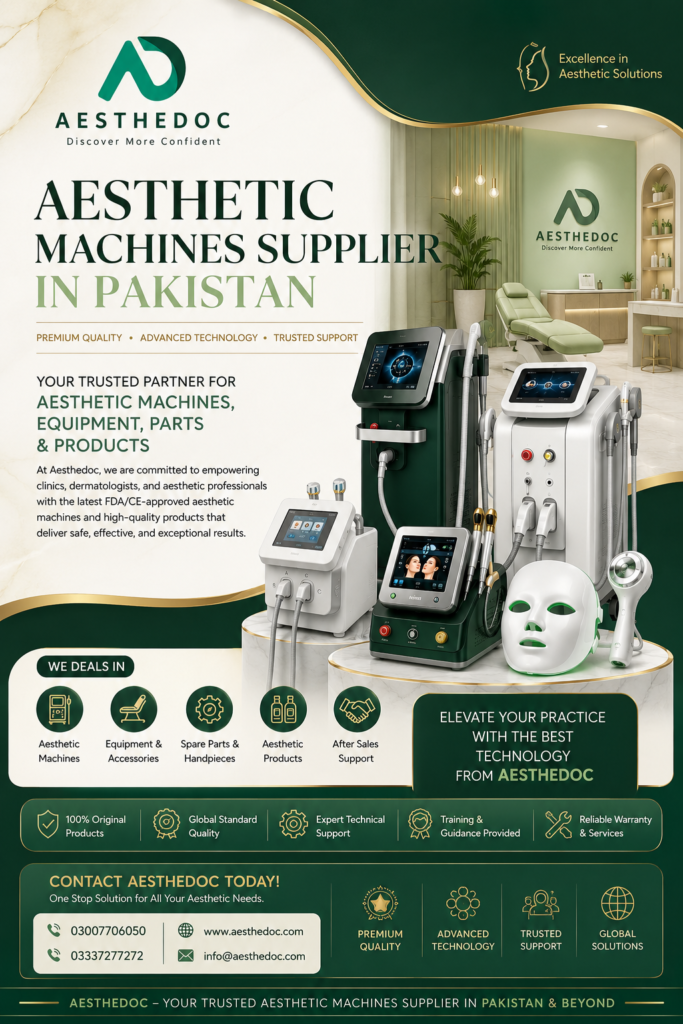
The global aesthetic medicine industry is growing faster than ever before. From advanced laser technologies and non-surgical facial rejuvenation to body contouring, cosmetic gynecology, and regenerative medicine, modern aesthetic clinics rely on innovative medical equipment to deliver safe, effective, and high-quality treatments.
As demand continues to rise, finding a trusted aesthetic machines supplier in Pakistan has become one of the most important decisions for dermatologists, plastic surgeons, cosmetic physicians, aesthetic doctors, laser clinics, beauty centers, hospitals, and medical entrepreneurs.
Whether you are establishing a new aesthetic clinic, expanding an existing practice, or upgrading your technology, choosing the right supplier is about much more than simply purchasing a machine. A reliable supplier provides expert guidance, authentic equipment, installation support, clinical training, technical assistance, spare parts, warranty services, and long-term partnership.
This comprehensive guide explains everything you need to know about choosing an aesthetic equipment supplier in Pakistan, the latest aesthetic technologies, global industry trends, clinic setup essentials, and why partnering with an experienced supplier can help your practice grow successfully.
The Global Growth of Aesthetic Medicine
Aesthetic medicine has evolved from a luxury service into one of the fastest-growing sectors of modern healthcare. Around the world, millions of people seek non-surgical and minimally invasive procedures to improve skin quality, address signs of aging, reduce unwanted hair, contour the body, and enhance overall appearance.
Popular treatments now include:
- Laser Hair Removal
- Pico Laser Treatments
- Fractional CO₂ Laser
- HIFU Skin Tightening
- RF Microneedling
- HydraFacial
- PRP Therapy
- Skin Boosters
- Botox
- Dermal Fillers
- PDO Thread Lifts
- Chemical Peels
- Tattoo Removal
- Pigmentation Treatments
- Acne Scar Revision
- Hair Restoration
- Cosmetic Gynecology Procedures
As patient expectations continue to increase, clinics must invest in modern technologies that deliver consistent performance, patient safety, and reliable outcomes.
Why Choosing the Right Aesthetic Machines Supplier Matters
Purchasing an aesthetic machine is a significant investment. The success of your clinic depends not only on the equipment itself but also on the quality of support you receive after the purchase.
A trusted supplier helps ensure that your investment delivers value over the long term.
A professional supplier typically offers:
- Genuine aesthetic equipment
- Clinical consultation before purchase
- Equipment selection based on your specialty
- Installation and calibration
- Doctor and staff training
- Technical support
- Warranty services
- Spare parts availability
- Software updates where applicable
- Preventive maintenance
- Ongoing customer support
This comprehensive approach helps clinics maximize equipment performance and provide better patient care.
Pakistan’s Expanding Aesthetic Industry
Pakistan has experienced remarkable growth in the aesthetic and cosmetic medicine sector over the past decade.
The increasing demand for minimally invasive cosmetic procedures has encouraged many professionals to establish:
- Dermatology clinics
- Aesthetic clinics
- Cosmetic surgery centers
- Laser clinics
- Hair transplant clinics
- Medical spas
- Beauty clinics
- Wellness centers
- Cosmetic gynecology clinics
Cities such as Karachi, Lahore, Islamabad, Rawalpindi, Faisalabad, Multan, Peshawar, Quetta, Gujranwala, Sialkot, and Hyderabad continue to see rising demand for advanced aesthetic technologies.
This growth has created opportunities for clinics to differentiate themselves by investing in high-quality equipment backed by professional support.
Who Needs an Aesthetic Equipment Supplier?
Professional aesthetic equipment suppliers work with a wide range of healthcare providers and businesses.
These include:
Dermatologists
Dermatology practices often require technologies for pigmentation management, acne treatment, laser procedures, skin rejuvenation, and hair restoration.
Plastic Surgeons
Plastic and cosmetic surgeons frequently integrate advanced aesthetic devices into surgical and non-surgical treatment plans.
Aesthetic Physicians
Doctors specializing in aesthetic medicine use a variety of energy-based devices for facial rejuvenation, body contouring, and skin enhancement.
Cosmetic Gynecologists
Modern cosmetic gynecology practices utilize specialized equipment for procedures focused on vaginal rejuvenation and women’s intimate wellness.
Hair Transplant Clinics
Hair restoration centers benefit from advanced tools that support follicular unit extraction, implantation, scalp analysis, and regenerative therapies.
Medical Spas
Medical spas combine physician-supervised treatments with wellness and skincare services, requiring versatile aesthetic technologies.
Hospitals
Many hospitals are expanding their cosmetic medicine departments with advanced laser systems and aesthetic equipment.
Beauty Clinics
Beauty professionals increasingly collaborate with medical practitioners to provide advanced skin care treatments using approved technologies.
What Makes a Professional Aesthetic Machines Supplier?
Not every company selling aesthetic equipment provides the same level of expertise.
A professional supplier acts as a long-term technology partner rather than simply a retailer.
Important qualities include:
Product Knowledge
Experienced suppliers understand:
- Treatment indications
- Machine specifications
- Clinical applications
- Safety protocols
- Maintenance requirements
This allows them to recommend equipment suited to your practice rather than promoting unnecessary products.
Authentic Equipment
Professional suppliers emphasize genuine products manufactured according to recognized quality standards.
Many clinics look for equipment with internationally recognized certifications where applicable.
Clinical Consultation
Before recommending equipment, experienced suppliers evaluate:
- Clinic goals
- Patient demographics
- Available budget
- Specialty
- Existing services
- Expansion plans
This consultation helps ensure that technology investments align with long-term business objectives.
Technical Expertise
Advanced aesthetic devices require professional installation, calibration, and periodic servicing.
Technical expertise helps minimize downtime and supports reliable equipment performance.
Training Programs
Even the most advanced machine requires proper operator training.
Professional suppliers often provide:
- Doctor training
- Staff education
- Treatment protocols
- Safety guidance
- Practical demonstrations
- Clinical support
Well-trained practitioners are better positioned to deliver safe and effective treatments.
Categories of Aesthetic Machines
Modern aesthetic clinics use a wide variety of medical devices.
These technologies serve different clinical purposes depending on patient needs.
Major categories include:
- Laser Systems
- Skin Rejuvenation Devices
- Body Contouring Equipment
- Hair Restoration Technology
- Facial Treatment Machines
- Cosmetic Gynecology Equipment
- RF Technologies
- Ultrasound Systems
- Diagnostic Devices
- LED Therapy Systems
- Regenerative Medicine Equipment
- Medical Imaging Devices
Each category addresses specific treatment goals and often complements other technologies within a comprehensive aesthetic practice.
Laser Hair Removal Machines
Laser hair removal remains one of the most requested aesthetic procedures worldwide.
Modern laser platforms are designed to target hair follicles while minimizing damage to surrounding skin.
Common laser technologies include:
- Diode Laser
- Alexandrite Laser
- Nd:YAG Laser
- Triple Wavelength Systems
These platforms may be used on different skin types depending on the device specifications and practitioner assessment.
Clinics selecting laser hair removal equipment should consider:
- Cooling technology
- Spot size
- Pulse duration
- Treatment speed
- Energy consistency
- Maintenance requirements
- Clinical support
Pico Laser Machines
Pico laser technology has transformed modern skin rejuvenation.
These ultra-short pulse laser systems are commonly used for:
- Pigmentation management
- Tattoo removal
- Skin revitalization
- Acne scar treatments
- Melasma management
- Fine lines
- Overall skin quality improvement
Pico technology delivers energy in extremely short pulses, reducing thermal exposure while targeting pigment particles.
Selecting the right Pico laser system requires understanding treatment capabilities, maintenance requirements, and clinical applications.
Q-Switched Nd:YAG Laser Systems
Q-Switched Nd:YAG lasers continue to play an important role in dermatology and aesthetic medicine.
These systems are frequently used for:
- Tattoo removal
- Pigmented lesions
- Freckles
- Sunspots
- Age spots
- Carbon laser facials
- Skin rejuvenation
Their versatility makes them a valuable addition to many aesthetic clinics.
Fractional CO₂ Laser Machines
Fractional CO₂ laser systems are among the most advanced technologies for skin resurfacing.
They are commonly used to improve the appearance of:
- Acne scars
- Surgical scars
- Fine lines
- Wrinkles
- Uneven skin texture
- Sun-damaged skin
Because these treatments involve controlled skin resurfacing, appropriate patient selection and operator training are essential.
Why Technology Selection Is Important
Every clinic serves a unique patient population.
Some practices focus on:
- Laser dermatology
- Anti-aging medicine
- Hair restoration
- Cosmetic gynecology
- Body contouring
- Skin rejuvenation
Rather than purchasing every available machine, successful clinics often begin with technologies that match their specialty and patient demand, then expand strategically as their practice grows.
A knowledgeable supplier can help prioritize equipment investments based on clinical needs, budget, and long-term goals.
HIFU Machines (High-Intensity Focused Ultrasound)
Among the fastest-growing technologies in aesthetic medicine, HIFU (High-Intensity Focused Ultrasound) has become a preferred option for clinics offering non-surgical skin tightening and facial rejuvenation.
Unlike treatments that target only the skin’s surface, HIFU delivers focused ultrasound energy to deeper tissue layers, stimulating the body’s natural collagen production process.
Depending on the device, HIFU technology may be used for:
- Non-surgical facelift
- Skin tightening
- Jawline definition
- Neck tightening
- Brow lifting
- Double chin improvement
- Body tightening
- Post-pregnancy skin laxity
Clinics considering HIFU systems should evaluate:
- Cartridge technology
- Treatment depth options
- Energy consistency
- User interface
- Safety features
- Clinical protocols
- Manufacturer support
Reliable HIFU equipment combined with proper practitioner training can become one of the most profitable services within an aesthetic clinic.
RF Microneedling Machines
Radiofrequency Microneedling has become one of the most sought-after treatments for skin rejuvenation because it combines controlled microneedling with radiofrequency energy.
This dual approach supports collagen remodeling while addressing multiple skin concerns.
RF Microneedling is commonly used for:
- Acne scars
- Enlarged pores
- Skin tightening
- Fine wrinkles
- Stretch marks
- Surgical scars
- Uneven skin texture
- Mild skin laxity
Modern RF systems offer adjustable needle depths, customizable energy settings, and insulated needle technology to suit different treatment areas.
Sylfirm X Technology
Sylfirm X represents an advanced generation of RF Microneedling technology designed for precision treatment of vascular and pigment-related concerns.
Depending on the clinical indication, practitioners may use this technology for:
- Melasma management
- Skin rejuvenation
- Fine lines
- Rosacea-related concerns
- Redness
- Acne scars
- Skin tightening
As with any advanced device, operator training and patient selection are essential for achieving optimal outcomes.
HydraFacial Machines
HydraFacial has become one of the world’s most recognized facial treatments because it combines cleansing, exfoliation, extraction, hydration, and serum infusion into a single procedure.
Patients often seek HydraFacial treatments because there is typically minimal downtime and the procedure can be tailored to individual skin concerns.
Common treatment goals include:
- Deep cleansing
- Hydration
- Congested pores
- Dull complexion
- Fine lines
- Oily skin
- Acne-prone skin
- Skin maintenance
When selecting a HydraFacial-compatible platform, clinics should consider:
- Vacuum technology
- Serum delivery systems
- Treatment versatility
- Consumable availability
- Technical support
- Maintenance services
IPL Machines (Intense Pulsed Light)
Although IPL is not technically a laser, it remains an important technology in aesthetic medicine.
IPL systems emit broad-spectrum light that may be used for multiple cosmetic concerns depending on filters and treatment settings.
Applications include:
- Pigmentation
- Sun damage
- Vascular lesions
- Facial redness
- Photorejuvenation
- Acne management
- Hair reduction in selected cases
Modern IPL platforms allow practitioners to customize treatments for different skin concerns through interchangeable filters and adjustable energy settings.
Fractional RF Systems
Fractional RF technology combines thermal energy with controlled tissue stimulation to improve skin quality.
These systems are commonly used for:
- Skin tightening
- Wrinkle reduction
- Acne scars
- Skin resurfacing
- Texture improvement
Advanced systems provide adjustable treatment parameters that allow practitioners to personalize procedures according to patient needs.
Cryolipolysis Machines
Cryolipolysis, commonly known as fat freezing technology, has become a popular non-surgical body contouring option.
These systems use controlled cooling to target localized fat deposits while preserving surrounding tissues.
Treatment areas may include:
- Abdomen
- Flanks
- Thighs
- Arms
- Back
- Chin
Clinics offering body contouring services often combine cryolipolysis with nutritional counseling and lifestyle recommendations for comprehensive patient care.
EMS Body Sculpting Machines
Electromagnetic muscle stimulation technology has introduced another non-invasive option for body contouring clinics.
EMS devices generate powerful muscle contractions designed to stimulate targeted muscle groups.
Common treatment areas include:
- Abdomen
- Buttocks
- Arms
- Thighs
- Core muscles
These technologies have become increasingly popular in aesthetic and wellness clinics focused on body shaping.
Fat Dissolving Equipment
Many clinics provide injectable fat reduction procedures alongside energy-based technologies.
Supporting equipment may include:
- Injection accessories
- Mesotherapy devices
- Cooling systems
- Cannulas
- Sterile consumables
- Treatment chairs
- Medical lighting
A professional supplier can help clinics source both equipment and compatible accessories required for these services.
Skin Analysis Systems
Modern skin analyzers play an increasingly important role in consultation and treatment planning.
These imaging systems help practitioners evaluate:
- Skin hydration
- Oil production
- Pigmentation
- UV damage
- Wrinkles
- Pore size
- Skin texture
- Redness
By documenting baseline conditions, skin analyzers support treatment planning, patient education, and progress monitoring.
LED Light Therapy Devices
LED therapy has become a valuable addition to many aesthetic practices due to its versatility and patient comfort.
Different wavelengths may be used as part of skin care protocols aimed at:
- Acne management
- Skin calming
- Post-procedure support
- General skin rejuvenation
LED devices are often integrated with facials, microneedling, and other non-invasive treatments.
Oxygen Facial Machines
Oxygen infusion systems are commonly incorporated into luxury facial treatments.
These devices are used to deliver specialized serums to the skin while providing a refreshing treatment experience.
Many clinics include oxygen facials as part of comprehensive skin rejuvenation programs.
Plasma Devices
Plasma technology has gained attention for certain aesthetic applications involving skin tightening and superficial skin treatments.
Depending on the device and regulatory approvals, plasma systems may be used for:
- Fine lines
- Skin laxity
- Small skin imperfections
- Eyelid rejuvenation in selected cases
Appropriate training is essential before incorporating plasma technology into clinical practice.
Cosmetic Gynecology Equipment
The field of cosmetic gynecology continues to expand worldwide.
Clinics specializing in women’s intimate wellness may utilize advanced technologies designed for procedures such as:
- Vaginal rejuvenation
- Vaginal tightening
- Stress urinary incontinence management
- Intimate wellness treatments
Common technologies include:
- Fractional CO₂ vaginal systems
- Erbium:YAG vaginal lasers
- Radiofrequency vaginal devices
- HIFU vaginal systems
These procedures should always be performed by appropriately qualified healthcare professionals following proper clinical evaluation.
Hair Transplant Equipment
Hair restoration clinics require specialized equipment to perform modern transplantation procedures efficiently.
Essential equipment may include:
- FUE extraction systems
- Implantation devices
- Surgical loupes
- Magnification systems
- Hair graft storage solutions
- Surgical instruments
- PRP centrifuges
- Microscopes
- Hairline planning tools
High-quality instruments contribute to precision and workflow efficiency during hair transplant procedures.
PRP Equipment
Platelet-Rich Plasma (PRP) has become a widely discussed regenerative treatment in aesthetic medicine.
Clinics performing PRP procedures often require:
- Medical centrifuges
- PRP preparation kits
- Collection tubes
- Sterile consumables
- Injection accessories
Equipment should be selected based on quality standards, compatibility, and clinical workflow.
Medical Treatment Chairs
Patient comfort plays an important role in every aesthetic clinic.
Professional treatment chairs offer:
- Electric adjustment
- Ergonomic positioning
- Height control
- Stability
- Easy cleaning surfaces
- Comfortable patient support
These chairs improve both practitioner ergonomics and patient experience.
Surgical Lights
Proper lighting enhances precision during aesthetic procedures.
LED surgical lighting systems provide:
- Shadow reduction
- Adjustable brightness
- Natural color rendering
- Energy efficiency
- Long operational lifespan
Good lighting is essential for procedures involving injections, lasers, and minor surgical interventions.
Clinic Furniture & Interior Equipment
A premium aesthetic clinic requires more than medical devices alone.
Additional essentials include:
- Reception desks
- Consultation tables
- Medical cabinets
- Instrument trolleys
- Waiting area furniture
- Storage systems
- Sterilization equipment
- Photography stations
- Digital displays
Thoughtfully designed interiors create a professional environment that enhances patient confidence and supports efficient clinical workflows.
Building the Right Technology Portfolio
One of the biggest mistakes new clinic owners make is purchasing too many machines without a clear strategy.
Instead, successful clinics often begin with a carefully selected technology portfolio based on:
- Local patient demand
- Doctor expertise
- Return on investment
- Treatment versatility
- Service expansion opportunities
- Budget planning
- Future growth objectives
Working with an experienced aesthetic machine supplier helps ensure that every equipment investment contributes to long-term clinic success rather than unnecessary expenses.
Beyond Machines: Building a Complete Aesthetic Practice
While advanced laser machines and energy-based devices are the foundation of many aesthetic clinics, a successful practice depends on much more than equipment alone.
Every day, aesthetic practitioners rely on a wide range of products, accessories, consumables, replacement parts, and technical support to provide safe, efficient, and high-quality patient care.
A professional aesthetic machines supplier understands that clinics need a complete ecosystem—not just a single machine.
Aesthetic Products Every Modern Clinic Requires
In addition to medical devices, clinics regularly purchase professional aesthetic products to support daily procedures.
These may include:
- Professional skincare products
- Mesotherapy solutions
- Skin boosters
- Hyaluronic acid products
- PRP accessories
- Microneedling cartridges
- Disposable consumables
- Medical-grade disinfectants
- Sterile drapes
- Procedure kits
- Cooling gels
- Conductive gels
- Treatment masks
- Medical gloves
- Protective eyewear
Using quality products helps maintain treatment consistency and supports patient safety.
Injectable Aesthetic Products
Many aesthetic physicians perform minimally invasive injectable procedures alongside laser and energy-based treatments.
Common categories include:
Dermal Fillers
Dermal fillers are used to restore facial volume, soften lines, and enhance facial contours.
Common treatment areas include:
- Lips
- Chin
- Jawline
- Cheeks
- Under-eye area
- Nasolabial folds
Anti Wrinkle Injectables
Although injectable medications are sourced according to local regulations, clinics also require compatible accessories such as:
- Fine needles
- Syringes
- Sterile preparation materials
- Ice packs
- Sharps disposal systems
Skin Boosters
Skin boosters are commonly incorporated into skin rejuvenation plans designed to improve hydration and overall skin quality.
Mesotherapy Products
Mesotherapy remains a popular option for:
- Skin rejuvenation
- Hair restoration support
- Hydration
- Localized aesthetic treatments
Clinics often require specialized mesotherapy needles, injection devices, and sterile consumables.
PRP Consumables
Clinics performing PRP procedures routinely use:
- Collection tubes
- Sterile syringes
- Centrifuge tubes
- Needles
- Preparation kits
Reliable sourcing ensures consistency and uninterrupted clinical operations.
PDO Thread Lift Products
Thread lifting has become a widely requested non-surgical facial rejuvenation treatment.
Clinics commonly stock:
- Mono threads
- Cog threads
- Screw threads
- PLLA threads
- PCL threads
- Barbed lifting threads
Selecting high-quality threads contributes to practitioner confidence and patient satisfaction.
Hair Transplant Consumables
Hair restoration clinics require a continuous supply of specialized consumables, including:
- FUE punches
- Implantation pens
- Sapphire blades
- Surgical markers
- Hair graft holding solutions
- Sterile trays
- Surgical drapes
- Microsurgical instruments
Maintaining an adequate inventory helps ensure smooth surgical workflows.
Cosmetic Gynecology Products
Clinics specializing in women’s intimate wellness may require:
- Vaginal laser accessories
- Disposable probes
- Sterile examination kits
- Procedure consumables
- Medical lubricants
- Specialized instruments
Professional suppliers help ensure compatibility between consumables and equipment.
Laser Machine Spare Parts
One of the most overlooked aspects of purchasing aesthetic equipment is long-term availability of spare parts.
Like all advanced medical devices, aesthetic machines require periodic servicing and component replacement.
Common spare parts include:
- Handpieces
- Laser fibers
- Cooling pumps
- Water filters
- Touch screens
- Power supplies
- Cooling fans
- Circuit boards
- Foot switches
- Connectors
- Optical lenses
- Mirrors
- Flash lamps
Choosing a supplier with reliable spare parts support minimizes downtime and protects your investment.
Laser Handpieces
Laser handpieces are among the most frequently used components of many aesthetic systems.
Depending on the technology, clinics may require handpieces for:
- Diode lasers
- Pico lasers
- Fractional CO₂ lasers
- Q-Switched Nd:YAG systems
- IPL platforms
- RF Microneedling devices
Proper handling, routine maintenance, and timely replacement help maintain consistent treatment performance.
Machine Maintenance Services
Preventive maintenance is essential for keeping aesthetic equipment operating efficiently.
Routine servicing may include:
- System inspection
- Calibration
- Cooling system checks
- Software diagnostics
- Energy output verification
- Cleaning internal components
- Safety testing
Regular maintenance can extend equipment lifespan and reduce unexpected breakdowns.
Technical Support
Aesthetic clinics depend on their equipment every day. If a machine stops functioning, appointments may need to be postponed, affecting both patient satisfaction and clinic revenue.
A professional supplier should provide:
- Technical troubleshooting
- Remote assistance where available
- On-site servicing
- Maintenance scheduling
- Repair coordination
- Replacement parts
- Equipment diagnostics
Responsive technical support is one of the most valuable services a supplier can offer.
Installation & Commissioning
Advanced medical equipment should always be installed according to manufacturer recommendations.
Professional installation typically includes:
- Equipment setup
- System testing
- Calibration
- Safety verification
- Operator orientation
- Initial demonstration
Proper installation helps ensure safe and reliable operation from the first day.
Training for Doctors & Clinic Staff
Technology is only as effective as the professionals using it.
Comprehensive training programs help practitioners understand:
- Treatment protocols
- Patient selection
- Contraindications
- Device settings
- Safety procedures
- Maintenance requirements
- Practical techniques
Well-trained teams deliver better patient experiences and maximize the value of clinic investments.
Aesthetic Clinic Setup Services
Many doctors dream of opening their own aesthetic clinic but feel overwhelmed by equipment selection, clinic design, and business planning.
An experienced supplier can simplify the process by assisting with:
- Equipment planning
- Clinic layout
- Technology recommendations
- Budget planning
- Interior consultation
- Procurement
- Installation
- Staff training
- Ongoing technical support
This allows healthcare professionals to focus on patient care while building a modern and efficient practice.
Choosing Equipment Based on Your Specialty
Different clinics require different technologies.
Dermatology Clinics
Common equipment includes:
- Fractional CO₂ Laser
- Pico Laser
- Q-Switched Nd:YAG
- RF Microneedling
- Skin Analyzer
- HydraFacial
- IPL
Plastic Surgery Clinics
Often invest in:
- Fractional lasers
- Skin tightening systems
- PRP equipment
- Surgical lighting
- Treatment chairs
Hair Restoration Clinics
Typically require:
- FUE systems
- DHI implantation devices
- PRP centrifuges
- Hair analysis equipment
- Surgical microscopes
Cosmetic Gynecology Clinics
May incorporate:
- Vaginal HIFU
- Fractional CO₂ vaginal lasers
- RF vaginal systems
- Examination equipment
Medical Spas
Frequently use:
- HydraFacial
- HIFU
- RF Microneedling
- LED Therapy
- Oxygen Facial Systems
- Skin Analysis Devices
Selecting equipment according to your specialty improves workflow efficiency and maximizes return on investment.
FDA & CE Certifications
Many clinics prefer equipment manufactured according to internationally recognized quality standards.
Depending on the product and market, machines may carry certifications or approvals such as:
- CE Marking
- FDA-related clearances or approvals where applicable
- ISO quality management certifications
- Good Manufacturing Practice (GMP) compliance
It’s important to understand that certification requirements vary by country, device type, and intended use. Reputable suppliers should provide documentation relevant to the products they distribute.
Why Long-Term Partnerships Matter
The relationship between a clinic and its equipment supplier should continue well beyond the initial purchase.
Long-term partnerships provide value through:
- Product updates
- New technology introductions
- Technical assistance
- Continuing education
- Maintenance services
- Spare parts availability
- Business growth support
Choosing a supplier committed to ongoing collaboration helps clinics adapt to evolving technologies and patient expectations.
Importing Aesthetic Machines in Pakistan
Many premium aesthetic machines used in Pakistan are manufactured internationally. Clinics often source technologies from countries known for innovation in medical aesthetics, including South Korea, Germany, Italy, Spain, the United States, and China.
Importing advanced equipment involves more than simply placing an order. Important considerations include:
- Product authenticity
- Manufacturer reputation
- Technical documentation
- Local regulatory requirements
- Warranty support
- Shipping and logistics
- Installation planning
- Availability of spare parts
- Clinical training
- After-sales service
Working with an experienced supplier helps simplify this process and reduces the risks associated with purchasing high-value medical equipment.
International Aesthetic Equipment Suppliers
The aesthetic industry is global, with manufacturers continually developing new technologies for dermatology, plastic surgery, cosmetic gynecology, and medical spas.
When evaluating an international supplier, clinics should consider:
- Years of industry experience
- Product quality
- Manufacturing standards
- Clinical evidence where available
- Customer support
- Training programs
- Global distribution network
- Spare parts availability
- Technical assistance
Reliable international partnerships allow clinics to access innovative technologies while maintaining consistent service standards.
OEM and Private Label Solutions
As the aesthetic industry expands, many distributors and healthcare businesses seek OEM (Original Equipment Manufacturer) or private-label solutions.
OEM services may include:
- Customized branding
- Logo placement
- User manuals
- Packaging
- Marketing materials
- Product customization (where available)
Private-label options can help distributors build their own brand while offering professionally manufactured equipment.
Wholesale Aesthetic Machines
Distributors, hospitals, and multi-location clinic groups often purchase equipment in larger quantities.
Wholesale solutions may include:
- Bulk purchasing
- Multi-clinic packages
- Customized quotations
- Technical training
- Coordinated installation
- Ongoing maintenance support
Selecting a supplier with experience in wholesale projects helps ensure consistency across multiple locations.
Setting Up a New Aesthetic Clinic
Opening an aesthetic clinic involves careful planning beyond selecting machines.
Key areas include:
Business Planning
Before investing in equipment, define:
- Target patient demographic
- Treatment portfolio
- Budget
- Staffing requirements
- Growth strategy
A clear business plan helps prioritize investments and avoid unnecessary expenses.
Clinic Design
A modern aesthetic clinic should balance functionality with patient comfort.
Important areas include:
- Reception
- Waiting lounge
- Consultation rooms
- Treatment rooms
- Sterilization area
- Storage
- Photography room
- Recovery space (if required)
Thoughtful design improves workflow and enhances the overall patient experience.
Equipment Selection Strategy
Rather than purchasing every available device, clinics should invest in technologies that align with patient demand and practitioner expertise.
A common phased approach may include:
Phase 1
- Diode Laser Hair Removal
- HydraFacial System
- HIFU Machine
- Skin Analyzer
Phase 2
- RF Microneedling
- Pico Laser
- Fractional CO₂ Laser
Phase 3
- Body Contouring Systems
- Cosmetic Gynecology Equipment
- Hair Restoration Technology
This staged investment strategy allows clinics to expand services sustainably.
Maximizing Return on Investment (ROI)
Aesthetic equipment represents a significant financial investment, making return on investment an important consideration.
Factors that may influence ROI include:
- Patient demand
- Procedure pricing
- Treatment versatility
- Equipment reliability
- Downtime
- Maintenance costs
- Practitioner expertise
- Marketing effectiveness
Versatile machines capable of addressing multiple indications often provide greater long-term value.
Why Training Is Essential
Advanced equipment alone does not guarantee successful outcomes.
Proper training enables healthcare professionals to:
- Understand device technology
- Select appropriate treatment parameters
- Recognize contraindications
- Manage patient expectations
- Perform procedures safely
- Reduce the risk of complications
Many reputable suppliers provide initial and ongoing training as part of their service.
Technical Support and Service Contracts
Reliable technical support minimizes disruption to clinic operations.
A comprehensive service program may include:
- Preventive maintenance
- Remote diagnostics
- On-site repairs
- Software updates (where applicable)
- Spare parts replacement
- Equipment calibration
Clinics should discuss service options before purchasing equipment.
Common Mistakes When Purchasing Aesthetic Machines
Avoiding common pitfalls can help protect your investment.
Choosing Based Only on Price
The lowest-priced machine may not offer the best long-term value if technical support, spare parts, or training are lacking.
Ignoring After-Sales Support
Reliable after-sales service is essential for minimizing downtime and maintaining equipment performance.
Purchasing Without Clinical Training
Proper training is critical for safe operation and effective treatments.
Buying Equipment Unsuited to Your Patient Base
Technology should match the needs of your practice and the procedures you intend to offer.
Overlooking Maintenance Requirements
Understanding servicing schedules and ongoing maintenance costs helps clinics plan effectively.
Future Trends in Aesthetic Medicine
The aesthetic industry continues to evolve rapidly, with innovations focused on improving patient outcomes and treatment efficiency.
Emerging trends include:
- AI-assisted skin analysis
- Multi-platform aesthetic devices
- Advanced laser technologies
- Regenerative medicine
- Exosome-based therapies
- Personalized treatment planning
- Smart software integration
- Energy-efficient systems
Clinics that adopt appropriate technologies while maintaining evidence-based practices are well positioned for long-term growth.
Why Choose Aesthedoc?
When selecting an aesthetic machines supplier in Pakistan, experience, product quality, technical expertise, and ongoing support are just as important as the equipment itself.
Aesthedoc is committed to supporting healthcare professionals, aesthetic clinics, dermatologists, plastic surgeons, cosmetic physicians, hair transplant specialists, and medical spas with comprehensive aesthetic solutions.
Our offerings include:
Advanced Aesthetic Machines
We supply a wide range of professional aesthetic equipment, including:
- Diode Laser Hair Removal Machines
- Pico Laser Systems
- Q-Switched Nd:YAG Lasers
- Fractional CO₂ Lasers
- Erbium:YAG Systems
- HIFU Machines
- RF Microneedling Devices
- HydraFacial Systems
- IPL Machines
- Cryolipolysis Equipment
- EMS Body Sculpting Systems
- Skin Analysis Devices
- LED Therapy Systems
- Oxygen Facial Machines
- Cosmetic Gynecology Equipment
- Hair Transplant Equipment
Aesthetic Products
We also provide a broad selection of professional aesthetic products and clinic essentials, including:
- Skin boosters
- Mesotherapy products
- PDO threads
- PRP accessories
- Professional skincare
- Treatment consumables
- Clinic supplies
- Procedure accessories
Spare Parts & Technical Support
To keep your clinic running efficiently, we offer:
- Machine spare parts
- Laser handpieces
- Technical assistance
- Preventive maintenance
- Equipment servicing
- Installation support
- Calibration services
Training & Clinic Development
Beyond supplying equipment, Aesthedoc helps clinics grow by offering:
- Equipment selection guidance
- Clinic setup consultation
- Doctor and staff training
- Workflow planning
- Business development support
- Ongoing technical guidance
Whether you are establishing your first clinic or expanding an existing practice, our team works with you to identify technologies that match your clinical goals and budget.
Frequently Asked Questions (FAQs)
Who is the best aesthetic machines supplier in Pakistan?
The best supplier is one that offers authentic equipment, technical support, installation, training, warranty services, spare parts, and long-term after-sales support. Rather than focusing only on price, clinics should evaluate product quality, service, and supplier experience.
What machines are required to start an aesthetic clinic?
The ideal equipment depends on your specialty, but many clinics begin with:
- Diode Laser Hair Removal Machine
- HydraFacial Machine
- HIFU Machine
- RF Microneedling Device
- Skin Analyzer
As the clinic grows, additional technologies such as Pico Laser, Fractional CO₂ Laser, and Body Contouring Systems can be added.
Which laser machine is best for laser hair removal?
Different technologies are suitable for different clinical situations.
Popular systems include:
- Diode Laser
- Alexandrite Laser
- Nd:YAG Laser
- Triple Wavelength Laser Platforms
The most appropriate choice depends on patient demographics, skin types, and treatment goals.
What is the difference between Pico Laser and Q-Switched Nd:YAG?
Both are widely used in aesthetic medicine.
Generally:
- Pico Laser delivers ultra-short pulses and is commonly selected for pigmentation, tattoo removal, and skin revitalization.
- Q-Switched Nd:YAG remains a versatile option for pigmentation treatments, tattoo removal, and carbon facials.
The appropriate system depends on your clinic’s services and patient needs.
Is HIFU a good investment?
HIFU has become one of the most popular non-surgical skin tightening technologies because it addresses a wide range of facial and body concerns.
For clinics with demand for non-invasive lifting procedures, HIFU can be an important addition to their service portfolio.
What is RF Microneedling used for?
RF Microneedling is commonly incorporated into treatment plans for:
- Acne scars
- Skin tightening
- Fine lines
- Enlarged pores
- Skin texture
- Stretch marks
Treatment suitability should always be determined by a qualified practitioner.
How important is after-sales support?
After-sales support is one of the most important factors when purchasing aesthetic equipment.
Professional support includes:
- Installation
- Training
- Maintenance
- Repairs
- Spare parts
- Technical guidance
Reliable support minimizes equipment downtime and protects your investment.
Can I purchase aesthetic machine spare parts separately?
Yes. Many professional suppliers offer replacement components such as handpieces, filters, cooling pumps, power supplies, optical parts, and other machine accessories.
Availability depends on the equipment model and manufacturer.
Do aesthetic machines require regular maintenance?
Yes.
Routine servicing helps maintain performance, supports patient safety, and may extend equipment lifespan.
Preventive maintenance is recommended according to the manufacturer’s guidance.
Can Aesthedoc help establish a new clinic?
Yes.
In addition to supplying equipment, Aesthedoc supports healthcare professionals with:
- Equipment selection
- Clinic planning
- Installation
- Training
- Technical support
- Product sourcing
- Long-term business partnership
Why Healthcare Professionals Trust Reliable Equipment Suppliers
Successful aesthetic practices depend on more than advanced technology—they rely on trusted partnerships.
Clinics benefit from suppliers who provide:
- Honest product recommendations
- Transparent communication
- Professional training
- Reliable technical support
- Long-term maintenance
- Continuous product availability
- Industry knowledge
- Business development guidance
These relationships help clinics deliver consistent, high-quality care while adapting to new technologies and evolving patient expectations.
Aesthedoc – Your Trusted Aesthetic Machines Supplier in Pakistan & Global Partner
Whether you are launching a new clinic, expanding your treatment portfolio, or upgrading existing equipment, Aesthedoc is committed to helping healthcare professionals build successful aesthetic practices.
We proudly serve:
- Dermatologists
- Plastic Surgeons
- Cosmetic Physicians
- Aesthetic Doctors
- Hair Transplant Surgeons
- Cosmetic Gynecologists
- Medical Spas
- Laser Clinics
- Hospitals
- Beauty Clinics
- Wellness Centers
Our Solutions Include
Professional Aesthetic Machines
- Diode Laser Machines
- Pico Laser Systems
- Fractional CO₂ Lasers
- Q-Switched Nd:YAG Lasers
- Erbium:YAG Systems
- HIFU Machines
- RF Microneedling Devices
- HydraFacial Systems
- IPL Machines
- Cryolipolysis Machines
- EMS Body Contouring Systems
- LED Therapy Equipment
- Skin Analysis Devices
- Hair Transplant Equipment
- Cosmetic Gynecology Equipment
Aesthetic Products & Consumables
Aesthedoc also supplies:
- Professional skincare products
- Mesotherapy solutions
- Skin boosters
- PDO threads
- PRP accessories
- Microneedling consumables
- Clinic disposables
- Treatment accessories
- Medical-grade consumables
Machine Parts & Accessories
We help clinics maintain equipment performance with:
- Laser handpieces
- Replacement parts
- Cooling systems
- Filters
- Power components
- Optical accessories
- Maintenance supplies
Complete Clinic Solutions
From concept to completion, Aesthedoc assists healthcare professionals with:
- Aesthetic clinic setup
- Equipment consultation
- Technology planning
- Installation
- Doctor and staff training
- Preventive maintenance
- Technical support
- Business growth guidance
Our objective is to build long-term partnerships by providing dependable products, responsive service, and practical solutions tailored to your clinic’s needs.
Contact Aesthedoc
If you are looking for a reliable aesthetic machines supplier in Pakistan or sourcing equipment for international markets, our team is ready to assist you.
We provide consultation to help you select equipment that aligns with your specialty, clinical objectives, and budget.
Contact Information
Aesthedoc
📞 0300-7706050
Whether you need a single machine, a complete clinic setup, professional products, spare parts, consumables, or technical guidance, Aesthedoc is your trusted partner for comprehensive aesthetic solutions.
Conclusion
The future of aesthetic medicine is driven by innovation, clinical excellence, and patient-centered care. Investing in advanced technologies is only one part of building a successful clinic. Choosing a knowledgeable supplier that offers ongoing support, professional training, reliable maintenance, and access to quality products is equally important.
As demand for non-surgical aesthetic treatments continues to grow in Pakistan, the Middle East, Asia, Europe, Africa, and other international markets, clinics require dependable partners capable of supporting long-term success.
Whether your focus is laser dermatology, aesthetic medicine, hair restoration, cosmetic gynecology, medical spa services, or wellness treatments, selecting the right equipment and supplier helps create a strong foundation for growth.
Aesthedoc is committed to supporting healthcare professionals with high-quality aesthetic machines, clinic equipment, consumables, spare parts, technical services, and training solutions. Our goal is to help clinics deliver safe, effective, and modern aesthetic treatments while building sustainable, successful practices.